Living in the Present, Planning for the Future: Inside the Galaxy S26 and Samsung’s UFS 5.0 Roadmap
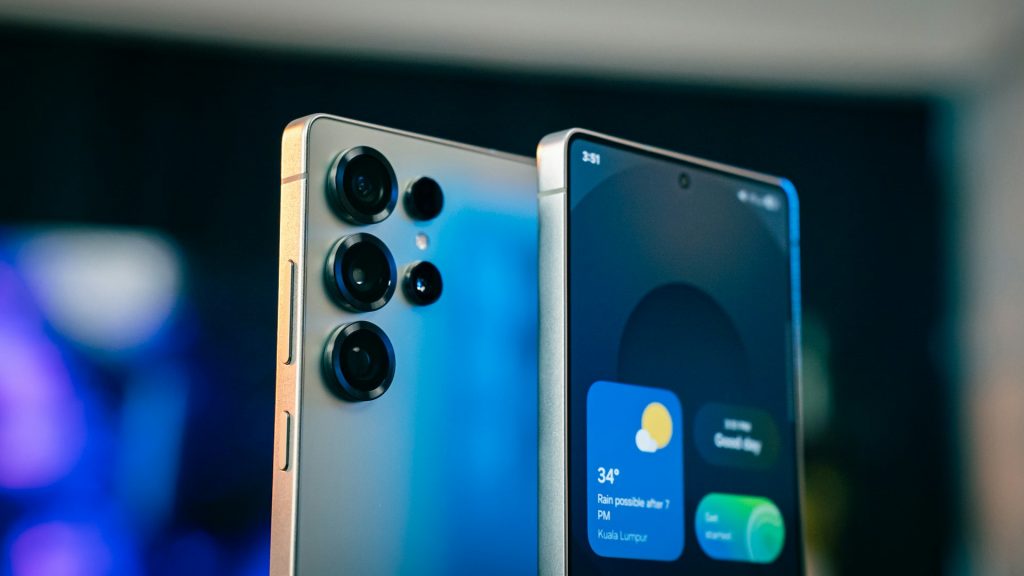
Samsung officially pulled back the curtain on its Galaxy S26, delivering a refined, ultra-premium compact phone that lands squarely at the $899 sweet spot for the baseline 12GB/256GB configuration. On paper and in the hand, it feels like a masterclass in modern hardware iteration. Weighing a nimble 167 grams and measuring a mere 7.2mm thick—barring the unavoidable camera bump that brings it closer to 10mm—the vanilla S26 is a deliberate nod to users tired of pocket-stretching phablets. It’s wrapped in Corning Gorilla Glass Victus 2 with a sleek aluminum frame, maintaining that familiar IP68 dust and water resistance peace of mind.
Flip the device over, and the 6.3-inch Dynamic AMOLED display is a genuine stunner, pushing a 2340×1080 resolution with a fluid 120Hz refresh rate. While marketing materials boast a peak of 3000 nits, independent lab testing clocks it at an excellent 2425 nits under realistic maximum auto-brightness conditions. Outdoor viewability is an absolute non-issue. It manages to cram a lot of screen into a small footprint, achieving a 91.24% screen-to-body ratio that makes the bezels practically melt away.
Current-Gen Muscle
Under the hood, North American units get the bespoke Snapdragon 8 Elite Gen 5 for Galaxy—a 3nm powerhouse built on an octa-core setup featuring two ultra-heavy-lift Oryon V3 Phoenix L cores clocked at a blistering 4.6GHz. International markets will see the phone ship with the Exynos 2600. Backed by 12GB of fast LPDDR5X RAM and the Adreno 840 GPU, the raw performance metrics speak for themselves. Early benchmarks show single-core scores hitting 3186 and multi-core tallies soaring past 10944 on GeekBench 6, ensuring that Android 16 and its promised seven years of OS updates will run without a hitch for the foreseeable future.
Power is sustained by a 4300 mAh lithium-ion battery supporting 25W wired charging and 15W Qi2 wireless charging, yielding roughly 15 hours and 48 minutes of continuous web browsing during real-world endurance tests. The imaging department relies on a trusted, high-performance triple-camera array. The main shooter features a 50MP Samsung GN3 sensor with an f/1.8 aperture and optical image stabilization. It’s flanked by a 12MP Sony IMX564 ultra-wide lens and a dedicated 10MP telephoto camera capable of a true 3.0x optical zoom. Video capture tops out at a crisp 8K at 30 frames per second, pushing overall photo and video performance scores that position it firmly among top-tier mobile shooters.
The Impending Storage Revolution
For all its cutting-edge silicon, the Galaxy S26 utilizes UFS 4.0 storage. It’s remarkably fast by today’s metrics, but behind the scenes, the architectural ground is already shifting. Despite ongoing component shortages and broader memory market volatility, Samsung is aggressively preparing Universal Flash Storage (UFS) 5.0 for mass production. They are targeting a launch window in the fourth quarter of late 2026. This isn’t just a routine iteration; it’s a massive performance leap designed specifically to handle the heavy computational demands of localized, on-device artificial intelligence.
The raw numbers attached to UFS 5.0 are staggering. We are looking at sequential read speeds hitting up to 10.8 GB/s and sequential write speeds topping out at 9.5 GB/s. To put that into perspective, that is roughly double the throughput of UFS 4.1, which maxed out at 4.3 GB/s. Hitting these theoretical caps in real-world scenarios will always depend heavily on the system-on-chip controller, thermal throttling behavior, specific file system access patterns, and cooling. But the baseline bandwidth is enormous. This massive data firehose is exactly what silicon vendors need to process multi-billion-parameter AI models directly on a handset without relying on cloud latency—a strategic trajectory that competitors like Apple have also been loudly telegraphing for their upcoming hardware cycles.
Surprisingly, this massive jump in speed isn’t coming at the expense of your battery. Samsung claims UFS 5.0 will drop power consumption by roughly 40% compared to the previous generation. By leveraging advanced clock gating techniques and implementing multiple voltage planes, the storage controller can process large data batches far more efficiently. Peak power draw during heavy, prolonged transfers might still spike, but the overall energy footprint shrinks dramatically, which is crucial for maintaining battery health over time.
A Shrinking Physical Footprint
Physically, the silicon package itself is shrinking. The new chips are engineered to measure just 7.5 x 13 mm with a razor-thin thickness of 0.9 mm. This tiny footprint means UFS 5.0 isn’t just destined for traditional slab phones like the inevitable Galaxy S27 next spring. It is tailor-made for space-constrained foldables, smart wearables, and extended reality (XR) headsets where every single millimeter of internal real estate is fiercely contested. Samsung is reportedly targeting storage capacities up to 1TB right out of the gate, though pricing and specific product variants remain under wraps for now.
While Samsung has yet to explicitly name the first retail device to feature this new storage type, the timeline points directly toward the next generation of flagships. They won’t be operating in a vacuum, either; industry rivals like Kioxia and SK Hynix have already announced their own plans to bring competing UFS 5.0 silicon to mass production. For anyone currently holding a brand-new Galaxy S26, the hardware is undeniably top-tier and future-proofed by a generous support cycle. But looking at the broader horizon of mobile technology, the S26 represents the absolute pinnacle of classic smartphone architecture, while UFS 5.0 is quietly laying the groundwork for what comes next.